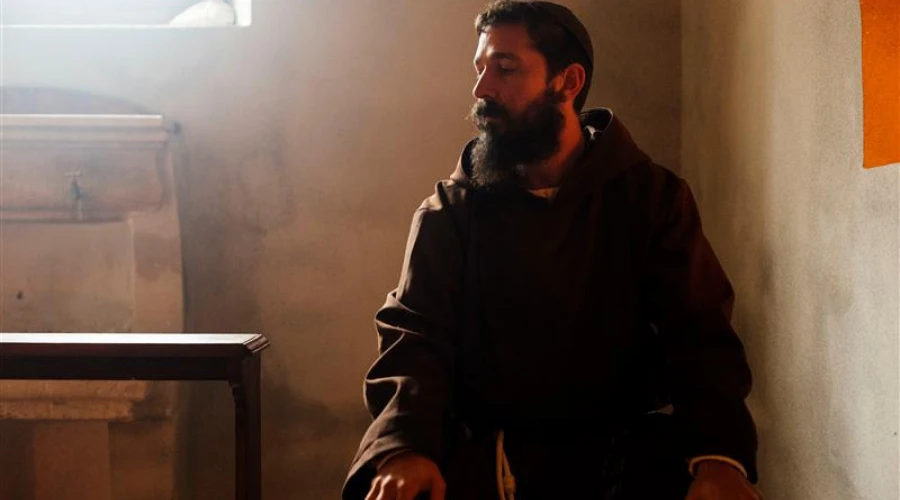
‘Padre Pio’ is a visually striking and deeply contemplative film that explores faith, mysticism, and personal sacrifice against the backdrop of post-World War I Italy. Shia LaBeouf delivers a brooding, intense performance as the legendary friar, capturing both his spiritual fervor and inner conflict, though at times his portrayal dominates the screen, making the narrative feel uneven. Abel Ferrara’s direction leans into a neorealist aesthetic, with handheld camerawork that immerses viewers in the chaos of the era and muted, earthy tones that reflect the harshness of the world around Padre Pio. Occasional shafts of light and careful framing isolate him in the frame, emphasizing his solitude and the weight of his spiritual journey.
The film’s sound design and score further enhance the atmosphere, using silence, ambient noise, and church bells to heighten tension and underscore moments of mystical revelation. Themes of devotion, social unrest, and the struggle between doubt and faith run throughout the story, with symbolic imagery—stigmata, crosses, and religious rituals—woven seamlessly into the visual narrative. While the pacing and fragmented storytelling may challenge some viewers, these choices mirror the tumultuous world and internal turmoil of the protagonist.
For viewers interested in cinematic explorations of spirituality, historical tension, and the complexities of faith, Padre Pio offers a haunting, provocative, and unforgettable journey.