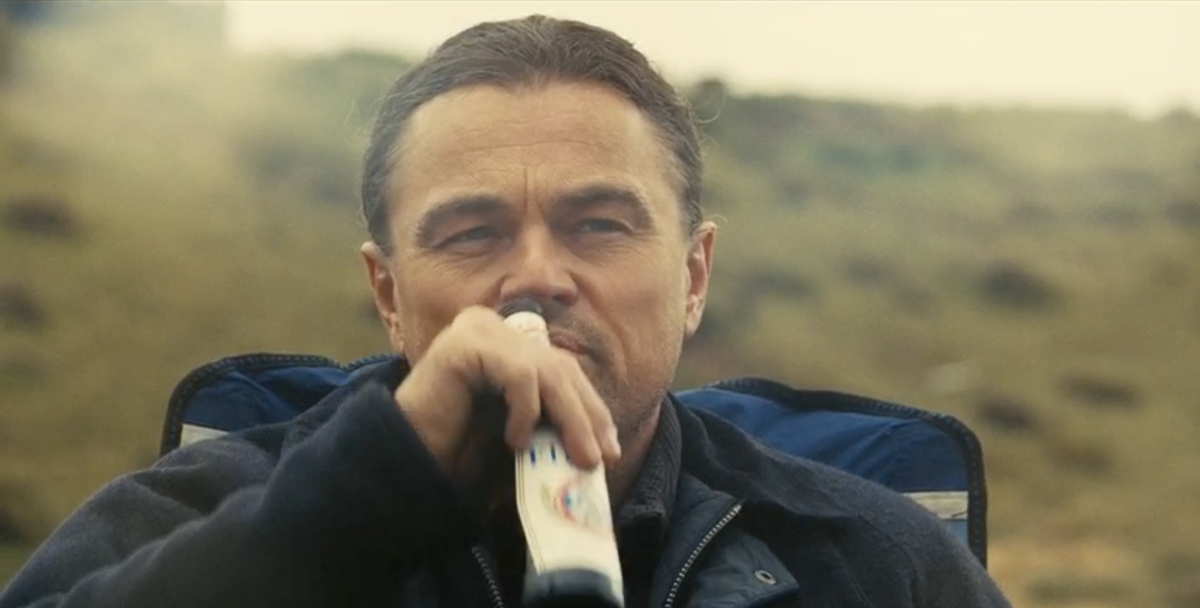
Paul Thomas Anderson’s One Battle After Another is one of his most ambitious works to date, both narratively and visually. Shot on 35mm film using VistaVision cameras, the cinematography by Michael Bauman gives the film a sweeping, old-Hollywood texture while capturing the chaos of its modern, politically charged story. The wide frames bring a sense of grandeur to the California deserts, border zones, and rural hideouts where much of the action unfolds, creating a striking contrast between expansive landscapes and claustrophobic institutional interiors. The camera thrives in moments of motion—car chases, raids, and confrontations are shot with visceral energy, making the audience feel caught in the turbulence, while quieter father-daughter exchanges between Leonardo DiCaprio’s Bob and Chase Infiniti’s Willa are rendered with a more restrained intimacy.
The ensemble cast elevates the material, grounding Anderson’s wild, Pynchon-inspired narrative in raw emotion and charisma. Leonardo DiCaprio commands the screen with a weary, layered performance that balances vulnerability with defiance, while Chase Infiniti shines as Willa, capturing both innocence and resilience in her breakout role. Supporting players like Sean Penn, Regina Hall, Teyana Taylor, and Benicio del Toro add color and unpredictability—each character embodying different shades of resistance, corruption, or survival in a fractured America.
Together, the cast infuses the film’s sprawling narrative with personality and urgency, ensuring that the spectacle never loses its human center. The strength of the cinematography lies in its ability to reflect the film’s thematic tensions: isolation, paranoia, radicalism, and memory. Wide, barren vistas underscore Bob’s fugitive status, while cramped, surveillance-heavy environments embody the ever-present pressure of the state. Anderson and Bauman also use lighting and visual rhythm to balance extremes scenes of chaos are offset by calmer interludes, keeping the emotional stakes grounded.
Ultimately, One Battle After Another proves significant because it blends Anderson’s trademark character depth with a more outward-facing, socially urgent lens, and its cinematography and ensemble cast make that ambition both palpable and unforgettable.