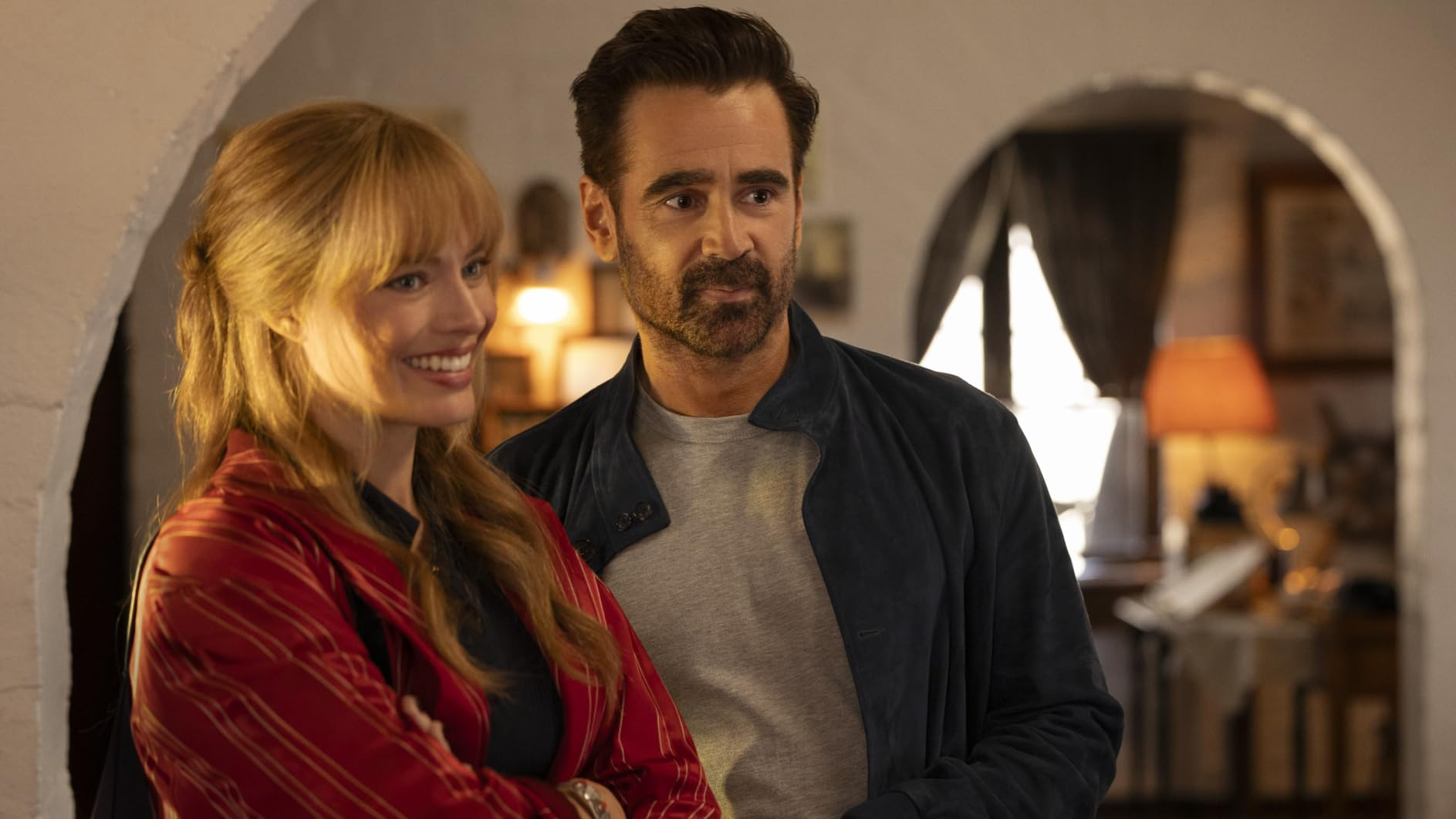
Watching ‘A Big Bold Beautiful Journey’ felt like stepping into a dream meticulously stitched together by Kogonada. The film opens with Sarah (Margot Robbie) and David (Colin Farrell) at a seemingly ordinary wedding, yet every frame pulses with possibility. The cinematography immediately draws you in—wide, sweeping shots of neon-lit streets blend seamlessly with intimate close-ups, capturing not just the characters’ faces but the invisible weight of their histories.
The story unfolds like a nonlinear chronograph of memory and emotion. Each moment feels deliberate, as though time itself is bending around Sarah and David’s journey. The magical GPS that guides them is less a plot device and more a lens through which we witness their past regrets and future hopes. Robbie’s performance radiates vulnerability without ever tipping into melodrama, while Farrell’s presence grounds the more surreal elements, giving their fantastical journey an emotional anchor.
I was struck by how the film balances whimsy and introspection. Scenes of the two characters revisiting childhood haunts or old apartments are intercut with vivid, almost hallucinatory sequences—a rooftop dance in the rain, a train ride through a city that morphs around them as that made the emotional beats land with unexpected weight. The pacing sometimes lags, yet even in those quieter moments, the cinematography and score (haunting piano motifs that swell at just the right moments) hold your attention, turning pauses into meditative spaces.
By the final act, I felt as though I had traveled not just through their story but through time and memory itself. The film’s magic isn’t in spectacle, but in its ability to make ordinary moments feel monumental, to make us aware of how choices, love, and regret ripple across the arcs of our lives.
Overall, from my perspective, ‘A Big Bold Beautiful Journey’ is a cinematic meditation on human connection, memory, and the strange, beautiful ways we navigate life. It isn’t perfect—some narrative leaps can feel abstract—but its heart is undeniably present, and it’s a film I’ll be reflecting on long after the credits roll.