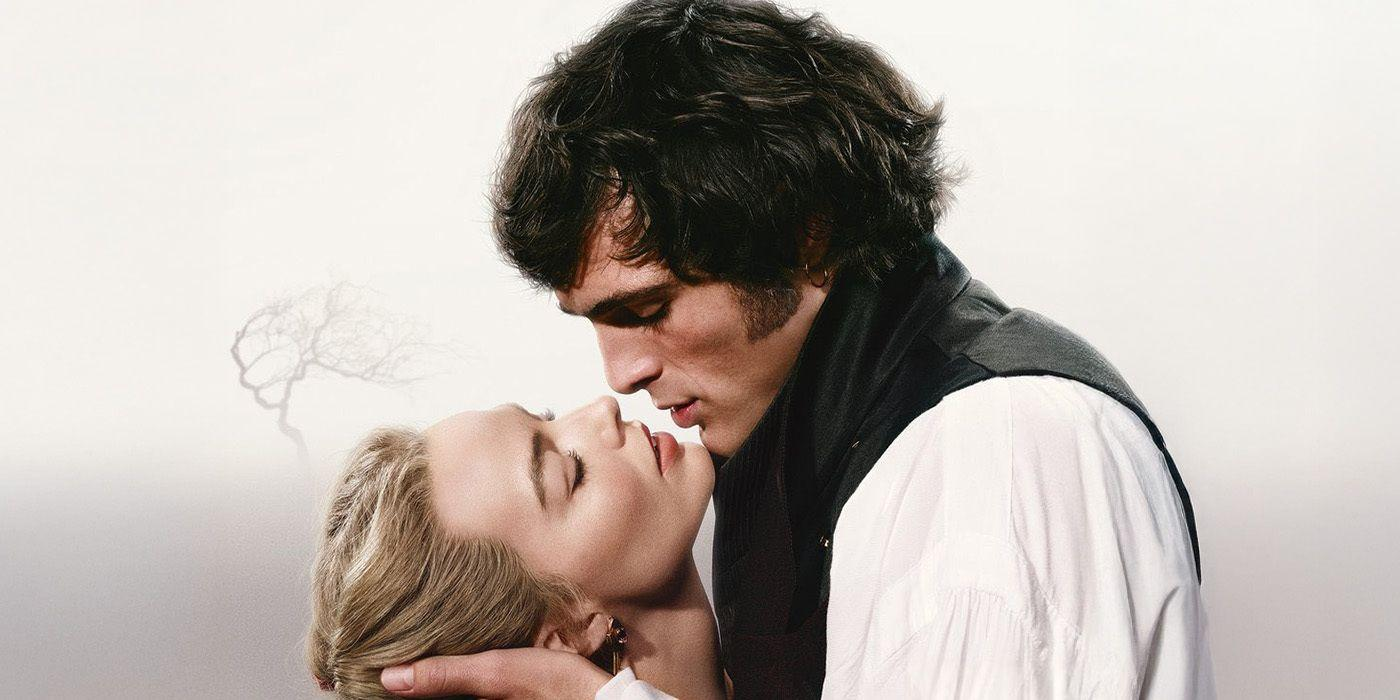
Emerald Fennell’s Wuthering Heights is a visually lush but emotionally turbulent adaptation of Emily Brontë’s novel. I felt like this film was almost a Gen-Z version of the story. Margot Robbie delivers a compelling, unpredictable Catherine, while Jacob Elordi’s Heathcliff feels quietly tragic and intense.
What stands out most is the cinematography, which leans into tactile, physical emotion — wind moving through tall grass, close-ups of hands brushing, faces lit by candlelight, bodies framed against the vast, empty moors. The camera often feels restless and intimate, as if pulled by the same force that draws Catherine and Heathcliff together. The landscapes are wide and cold, but the framing between the characters is close, charged, and almost suffocating.
Fennell emphasizes the raw physical longing between Catherine and Heathcliff — not in a polished romantic way, but in something messier and more impulsive. Their connection feels wild, reckless, and almost feral, driven by desire, anger, and emotional dependence. This intensity gives the film an edge that feels sensual and uncomfortable at the same time, reinforcing the idea that their love is inseparable from pain.
The film captures the obsession and grief at the heart of the story, even when its stylized approach makes the narrative feel uneven. I’d recommend it for viewers who enjoy moody, stylized literary adaptations and films that focus on atmosphere and emotional intensity — but maybe not for someone looking for a straightforward romance or a very faithful version of the novel.