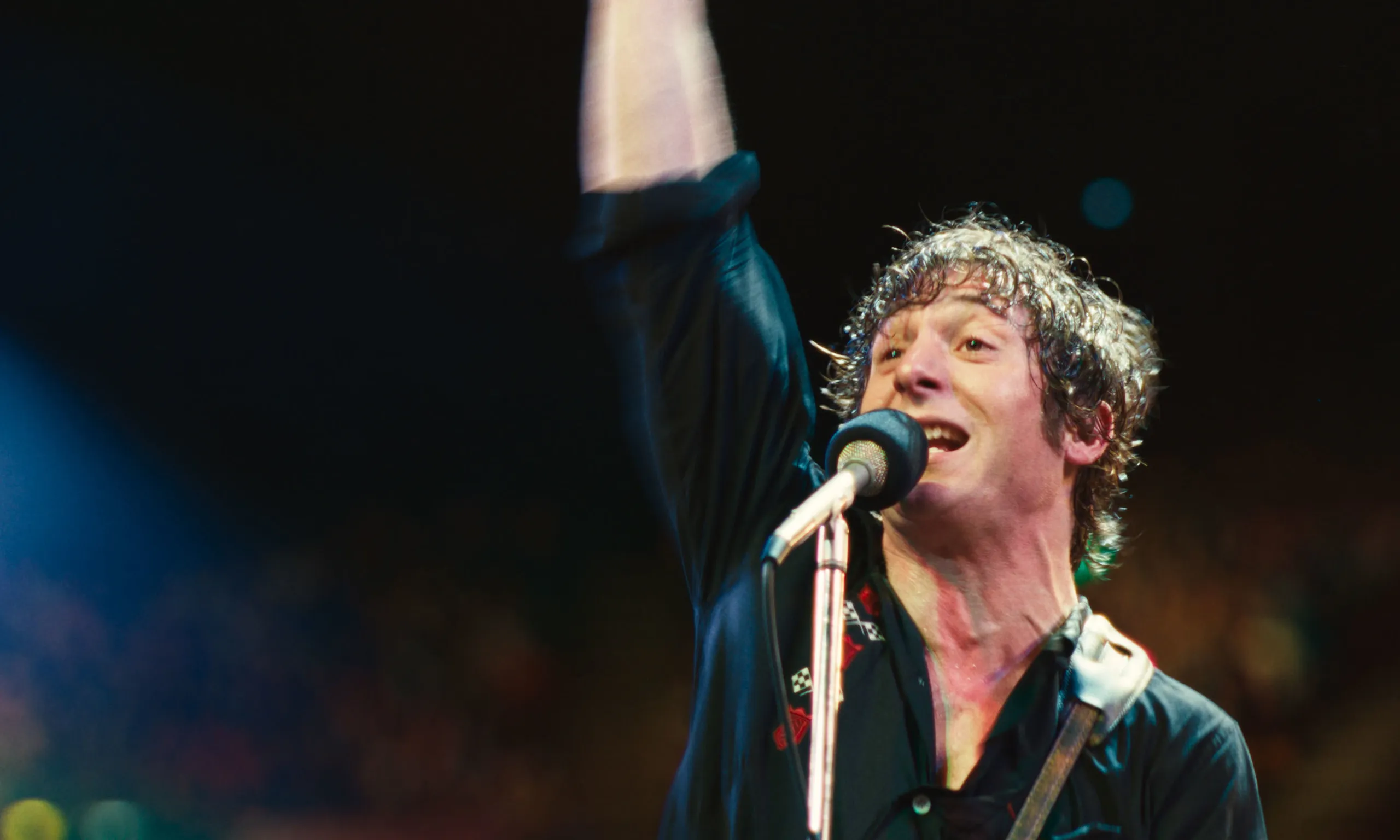
Jeremy Allen White’s Bruce Springsteen doesn’t shout — he aches. In ‘Deliver Me from Nowhere’, director Scott Cooper trades stadium lights for shadowed motel rooms, chasing the ghost of a musician at war with his own myth. The result is a biopic that hums like a demo tape: rough, intimate, imperfect, but alive with truth.
The film unfolds around the making of Nebraska, Springsteen’s quietest and perhaps most devastating record. White gives a performance stripped of vanity — all inward collapse and unspoken fury. His Springsteen isn’t the “Born to Run” hero but a man trying to remember why he ran at all. Stephen Graham, as Springsteen’s father, embodies the bruised masculinity that haunts every chord. Jeremy Strong’s Jon Landau acts as both mirror and mediator, pushing Bruce to face the silence he’s been drowning out with sound. The chemistry between them recalls the tension of creative partnerships like Amadeus or Inside Llewyn Davis: art as both salvation and self-destruction.
Cinematographer Masanobu Takayanagi frames New Jersey not as nostalgia but as purgatory — highways, diners, and fog-soaked fields suspended between past and present. Cooper’s pacing is deliberate, at times glacial, but it suits a story about paralysis — about what happens when success becomes its own cage. There’s an almost spiritual quality to the film’s restraint.
Cooper doesn’t mythologize Springsteen; he humanizes him. The camera lingers on hands, tape decks, and the raw act of creation, reminding us that genius isn’t loud — it’s lonely. Still, the film stumbles in its familiarity. The “tortured artist” arc is well-worn, and some dialogue veers toward reverence. But when ‘Deliver Me from Nowhere quiets’ down and when it lets the music, or the silence, speak.. it’s quietly transcendent. In the end, the movie feels less like a biography and more like a prayer: for meaning, for mercy, for deliverance.