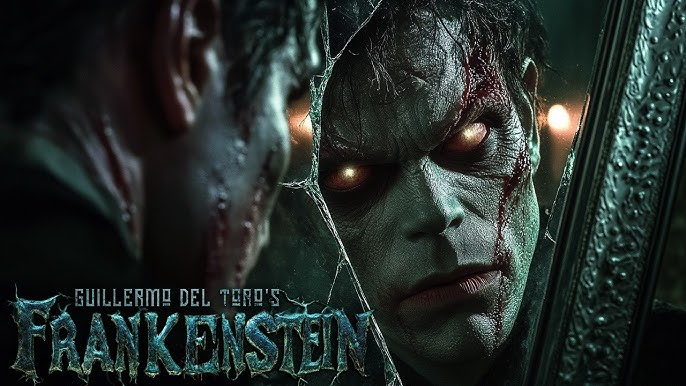
Guillermo del Toro’s Frankenstein isn’t a horror film in the traditional sense — it’s a tragic meditation on grief, creation, and what happens when the human desire to control life turns into obsession. It’s visually stunning, emotionally suffocating, and occasionally uneven, but it reimagines Mary Shelley’s story with the kind of aching humanity only del Toro could deliver.
Oscar Isaac’s Victor Frankenstein is a man consumed by loss and it shows in every frantic experiment and haunted gaze. His creation (Jacob Elordi) isn’t a monster; he’s a mirror. The Creature becomes a vessel for all the guilt, abandonment, and yearning Victor tries to bury beneath science. Every interaction between them feels like a tug-of-war between creator and creation, power and dependency, control and conscience.
Del Toro’s direction is drenched in atmosphere. Candlelight flickers against metal, organs pulse beneath stitched skin, and the world feels cold even when it glows gold. The film’s first half builds a chilling intimacy of a a man playing god in a lab while the second half becomes a desperate search for meaning after the miracle turns to horror. It’s slow at times, but that pacing lets you sit with the discomfort of what it means to make something that feels pain.
Underneath the Gothic beauty lies a psychological core. Frankenstein is less about fear of monsters and more about fear of memory and the the inability to forget, forgive, or let go. It’s also a film about agency and about being trapped inside someone else’s idea of what you should be. The Creature’s rebellion isn’t rage; it’s a search for selfhood. That emotional thread gives the film a modern urgency, especially in an age obsessed with technology, replication, and control.
Every frame of Frankenstein looks like a painting lit by guilt and candlelight. Dan Laustsen’s cinematography captures a visual tension between beauty and decay with metallic blues melt into golds, shadows bleed into skin, and even the flicker of a lantern feels alive. The camera moves with the rhythm of obsession: slow, deliberate, and often claustrophobic, forcing us to sit in the unease of Victor’s world. The lighting is both sacred and surgical, turning laboratories into cathedrals and grief into something almost divine. There’s a tactile texture to every shot like mist, glass, stitched flesh — that reminds you how physical this story is.
A visually haunting, psychologically rich retelling that trades jump scares for emotional scars. Del Toro explores the boundaries between creation and cruelty, love and possession, giving Mary Shelley’s myth a pulse that feels painfully modern. I really recommend this one as it is one of my favorites of the year!