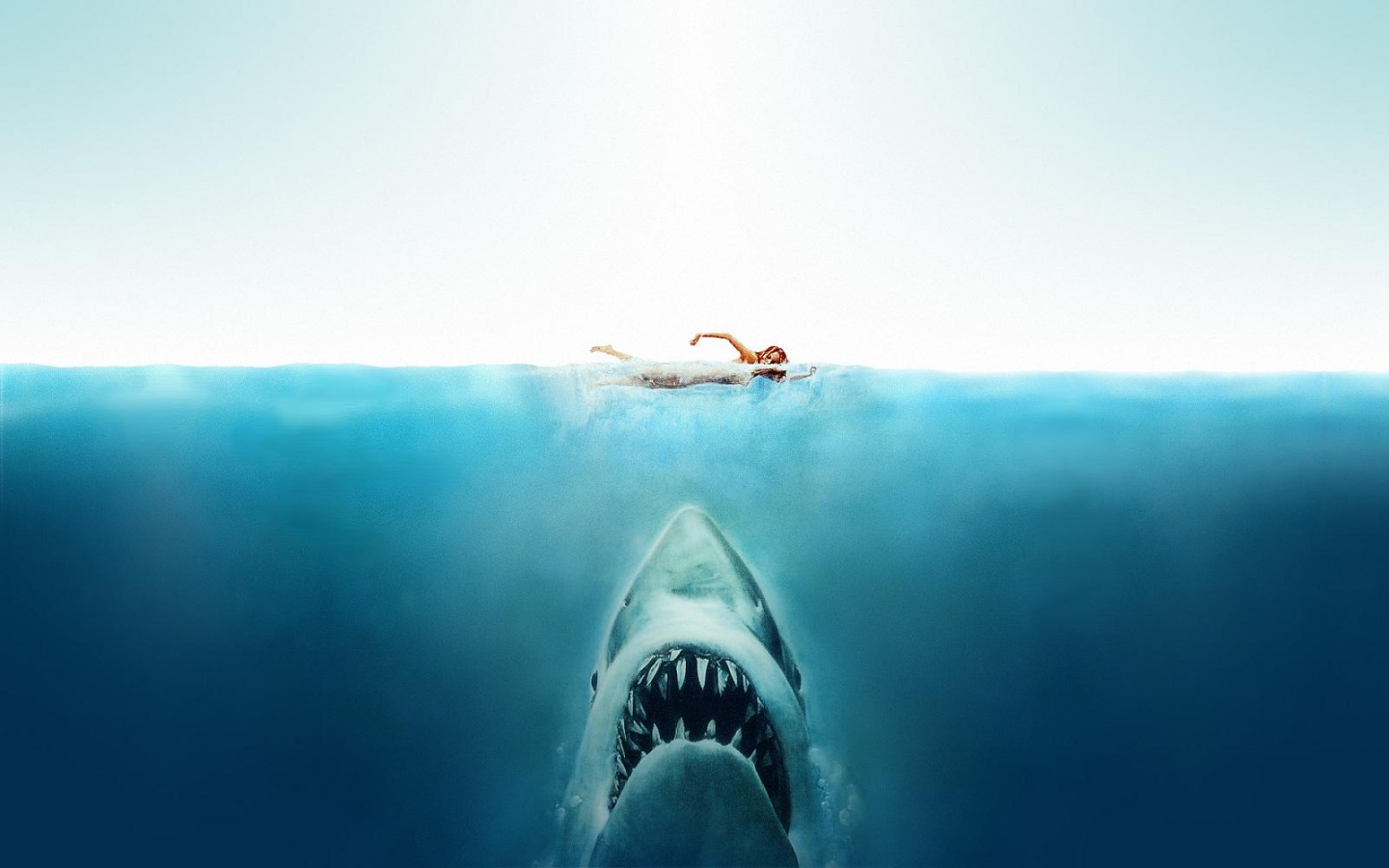
Jaws is returning to theaters for its 50th anniversary. It will be re-released on August 29th, 2025, and will be playing through September 4th!
Jaws (1975), directed by Steven Spielberg, remains a masterclass in suspense. Spielberg and DP Bill Butler turn the ocean into a stage for fear, using underwater POV shots, natural lighting, and clever framing to highlight human vulnerability. Hand-held and tracking shots immerse viewers, while shadowy water contrasts with sunlit beaches to build tension. Even without always showing the shark, every frame keeps audiences on edge, proving that suggestion and perspective make horror unforgettable.
- Director of Photography: Bill Butler
Butler’s work on Jaws helped define suspense through visual storytelling, especially given the challenges of shooting on water. - Use of Point-of-View Shots:
- The shark’s “POV” shots, often submerged or cutting through murky water, make the audience feel the predator’s presence even before it appears.
- These shots, paired with John Williams’ score, create tension without showing the shark, proving that suspense often relies on what’s implied, not what’s seen.
- Lighting and Color:
- Bright, sunlit beach scenes contrast sharply with the ominous, shadowy underwater shots, emphasizing the threat lurking beneath calm waters.
- Natural lighting was used extensively, which helped make the threat feel real and immediate.
- Camera Movement:
- Steadicam-like shots on boats, hand-held sequences during shark attacks, and smooth tracking shots on the shoreline all serve to immerse the viewer in the action.
- Slow pans and long shots often build suspense by keeping the audience waiting for the next danger.
- Composition and Framing:
- Characters are often framed against open water, emphasizing their vulnerability.
- Tight close-ups during moments of panic capture fear and humanize the terror of the shark attacks.
- Innovative Underwater Cinematography:
- Filming underwater in the 1970s was challenging, yet Butler and the team managed to create sequences that feel claustrophobic and menacing.
- The murky, distorted visuals of the shark beneath the water amplify the sense of an unseen threat.
Overall, ‘Jaws’ is a masterclass in visual storytelling where the cinematography doesn’t just capture the action—it creates suspense, fear, and anticipation. The limitations of the mechanical shark actually forced the filmmakers to innovate, leading to a style that still influences thrillers and horror today.