A Dark Song isn’t just a horror film—it’s an endurance ritual, for both its characters and the audience.
Directed by Liam Gavin, the film strips occult horror down to its rawest elements. There are no flashy jump scares or crowd-pleasing set pieces. Instead, it traps you inside a decaying house with grief, obsession, and a ritual that feels brutally real. The horror comes from time, repetition, exhaustion, and the sense that something irrevocable is being invited in.
Catherine Walker delivers a devastating performance as Sophia, a woman consumed by loss and willing to sacrifice everything—her safety, sanity, and morality—for a chance at closure. Steve Oram’s Joseph is equally unsettling: abrasive, cruel, and disturbingly convincing as a man who treats ritual magic like manual labor. Their dynamic is tense, ugly, and deeply human, built on mistrust rather than comfort.
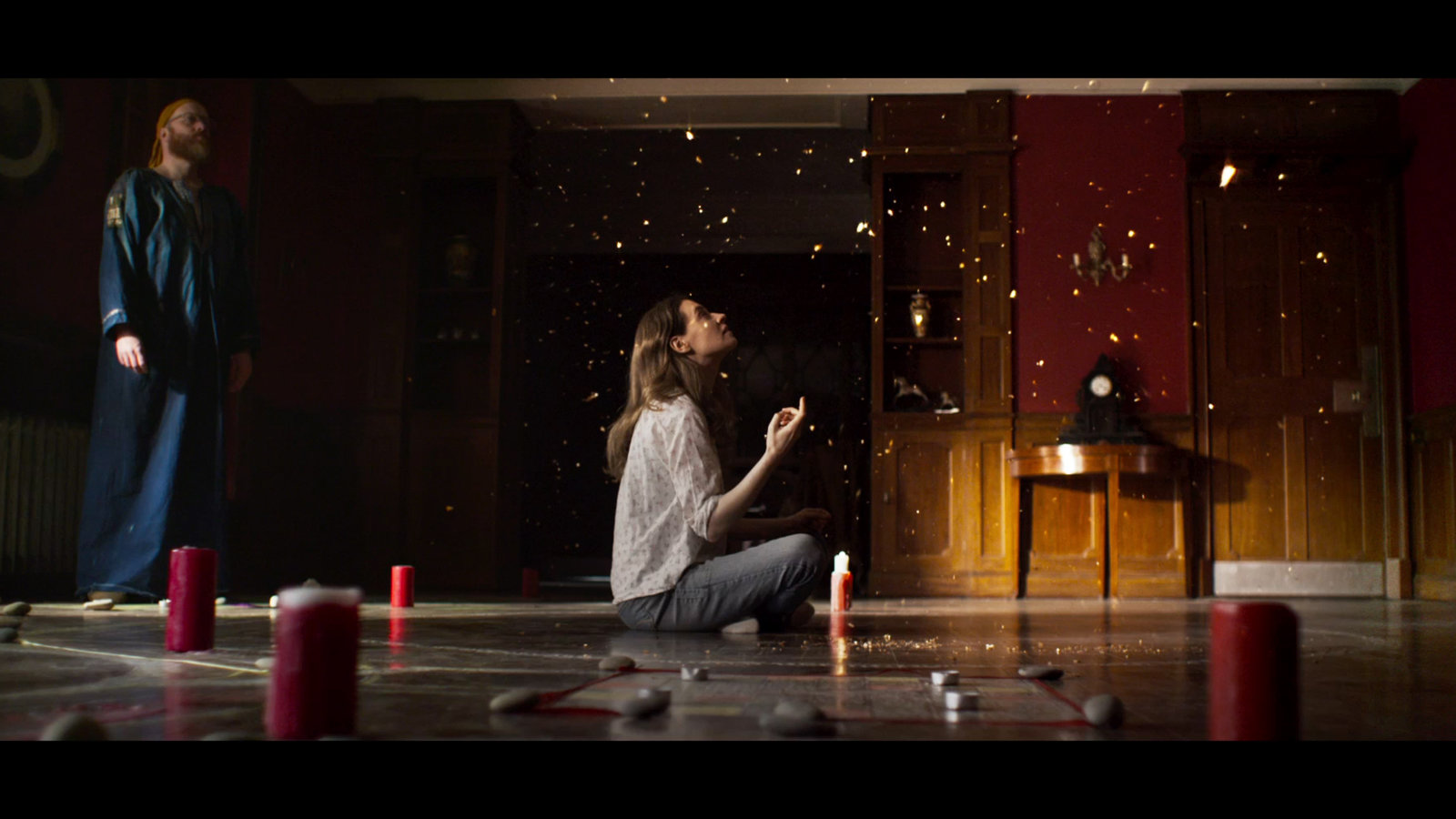
Visually, the film is claustrophobic and punishing. The house becomes a liminal space where sleep deprivation and spiritual corruption bleed together. Long stretches of silence, whispered incantations, bodily suffering, and relentless procedural detail make the ritual feel authentic rather than theatrical. This commitment to realism is what makes the supernatural elements land so hard when they finally surface.
What truly elevates A Dark Song is its emotional core. Beneath the occult mechanics is a story about grief that refuses easy absolution. The film asks uncomfortable questions: What would you give to undo loss? And what if forgiveness—rather than vengeance—is the most terrifying outcome of all?
The ending is divisive, but deliberately so. It doesn’t offer comfort; it offers reckoning. It reframes the entire ordeal not as a quest for power, but as a confrontation with pain that cannot be magically erased.
A Dark Song is slow, brutal, and uncompromising. It’s not for casual horror viewers—but for those drawn to psychological, spiritual, and existential dread, it’s one of the most haunting occult films of the last decade.