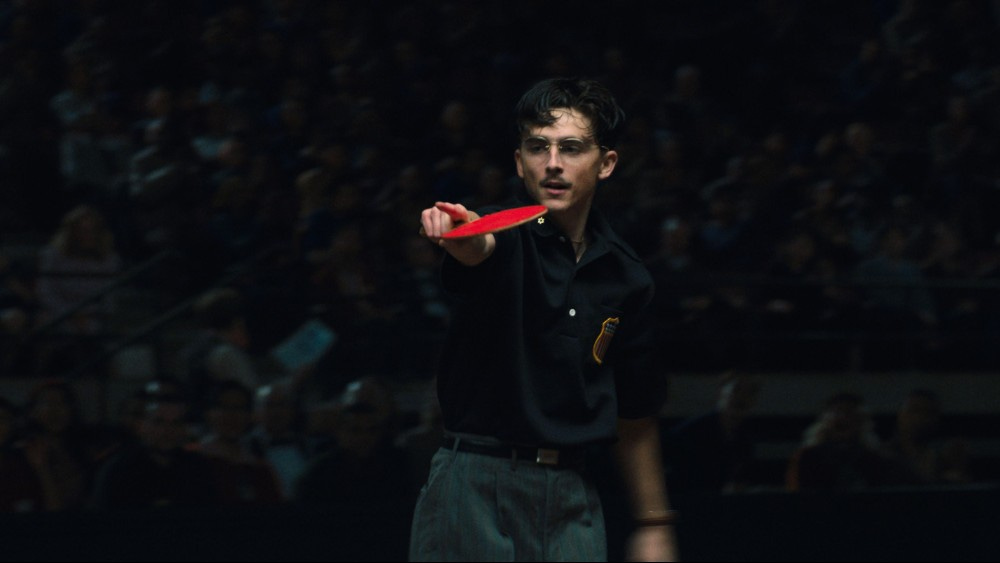
Marty Supreme isn’t just a sports movie. It’s a pressure cooker.
From the first frame, it feels wired, restless, alive.
Timothée Chalamet disappears into Marty with a kind of feral ambition that’s impossible to look away from. He’s charming, irritating, magnetic, exhausting, and that’s the point. This isn’t a clean underdog story. It’s about obsession, ego, and the cost of wanting something too badly. Marty doesn’t just want to win. He wants to be seen.
Josh Safdie shoots the film like a pulse, using tight close ups, jittery movement, and a constant sense that everything could spiral at any second. Even a ping pong match feels like life or death. The 1950s New York setting is grimy, sweaty, and textured, never romanticized. You feel the smoke in the air and the desperation in the rooms.
What stayed with me most is how uncomfortable the film is willing to be. Marty isn’t easy to root for. He’s selfish, delusional, and often cruel, but painfully human. The film asks whether greatness is worth the damage it leaves behind, and it never gives you a neat answer.
Marty Supreme is loud, chaotic, and unapologetically messy, but that mess is the magic. It’s a film that doesn’t want to comfort you. It wants to rattle you.