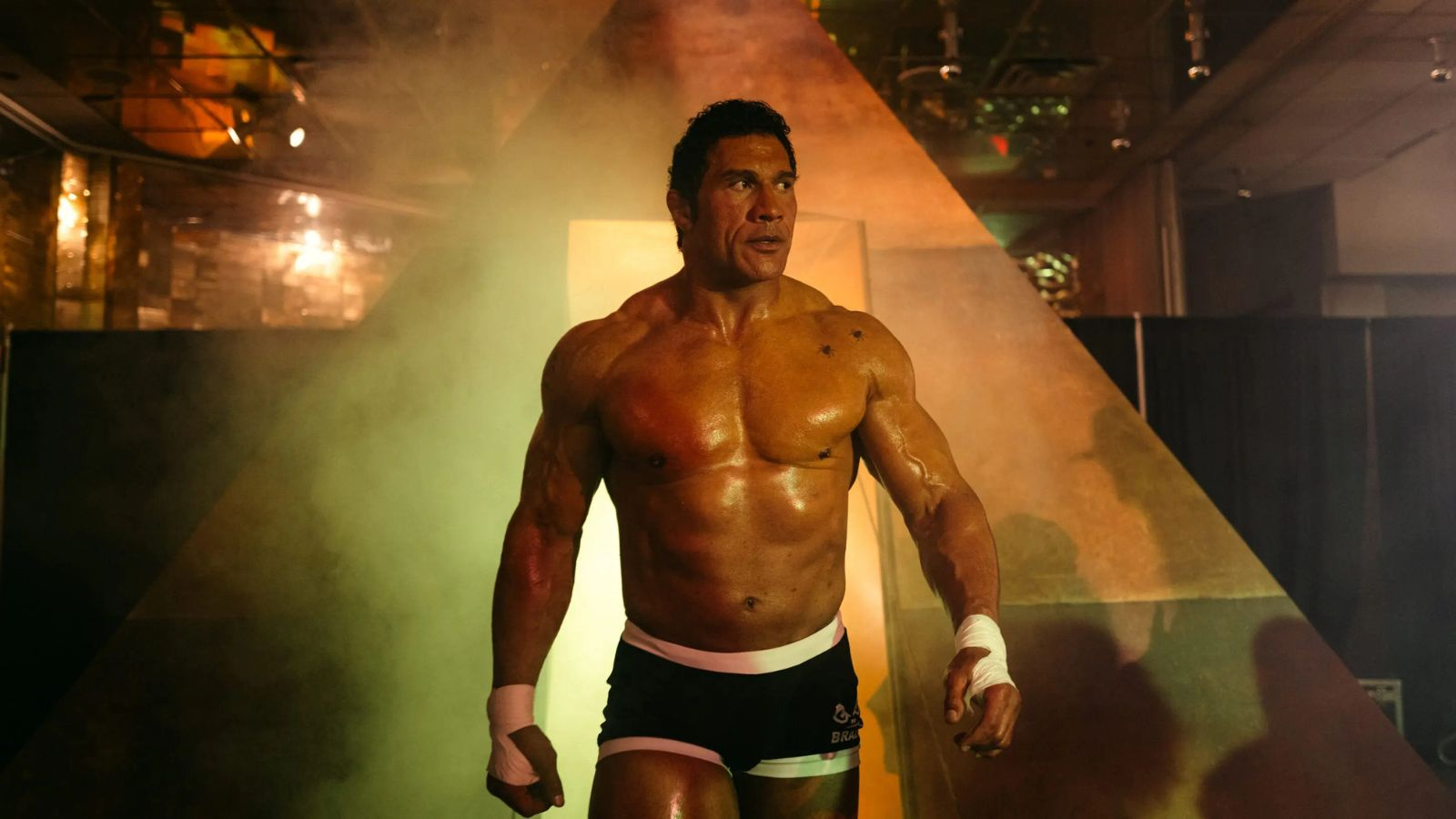
The Smashing Machine is one of Dwayne Johnson’s most introspective performances — a raw, unvarnished portrayal of fighter Mark Kerr that strips away his usual heroic polish. Directed by Benny Safdie, the film trades spectacle for realism, shot with handheld intimacy and the grain of 16 mm film that makes every bruise, breath, and silence feel lived-in. It’s not a traditional sports drama; instead of triumph, it focuses on identity, addiction, and the quiet devastation of being defined by your own strength. Johnson delivers a surprisingly vulnerable turn, embodying a man who can’t stop fighting — not his opponents, but himself. Emily Blunt adds emotional tension as Dawn, the partner caught in the undertow of his unraveling. While the pacing can drift and the story sometimes feels incomplete, Safdie’s direction roots the film in honesty and discomfort rather than polish. The Smashing Machine isn’t about glory — it’s about survival, control, and what remains when the body breaks but the need to prove yourself doesn’t. It’s haunting, exhausting, and deeply human — a bruised portrait of ambition and collapse that lingers long after the final bell.
The Smashing Machine